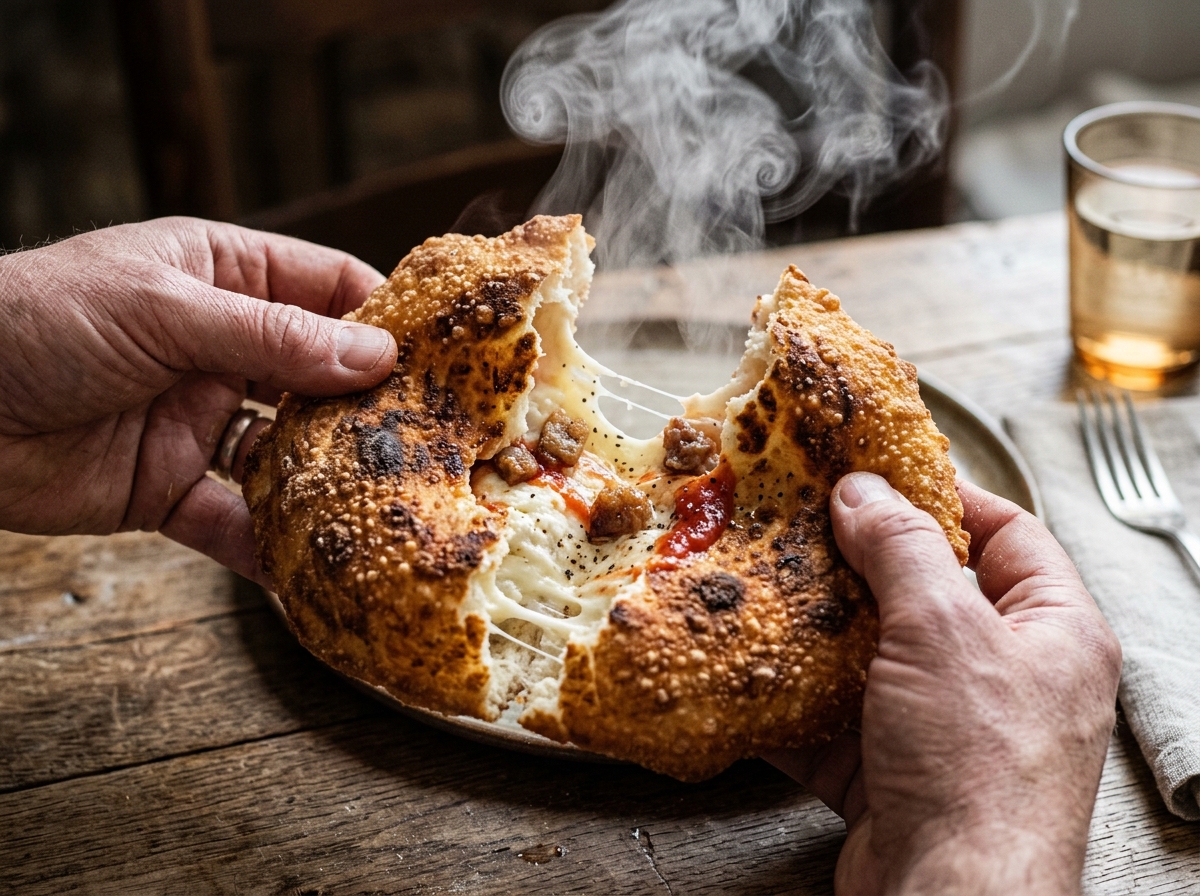
Born in the rubble of post-WWII Naples in 1945—when Allied bombings had cracked the brick wood kilns of the city and mozzarella was an unobtainable luxury—the matriarchs of the Neapolitan alleys (i bassi) dragged cast-iron cauldrons (caldaroni) onto the sidewalks, stuffed fermented dough with humble whey ricotta, smoked provola ends, and pressed pork cracklings (ciccioli), and sold them on an eight-day credit system known as the Pizza a Otto (immortalized by Sophia Loren in Vittorio De Sica's 1954 film L'Oro di Napoli).
What began as wartime survival revealed a profound thermodynamic paradox: properly fried pizza dough is lighter, crisper, and more digestible than stone-baked bread. Because liquid oil possesses a volumetric heat capacity and convective heat transfer coefficient roughly ten times higher than dry oven air, immersing sealed dough in 180°C high-oleic sunflower oil triggers three simultaneous physical phenomena: