Every member of the Italian pasta filata and whey dairy family exhibits distinct moisture kinetics, fat emulsion stability, and thermal flow behavior. Use the reference matrix below to match your cheese selection, cut geometry, and drainage timeline to your oven's heat flux.
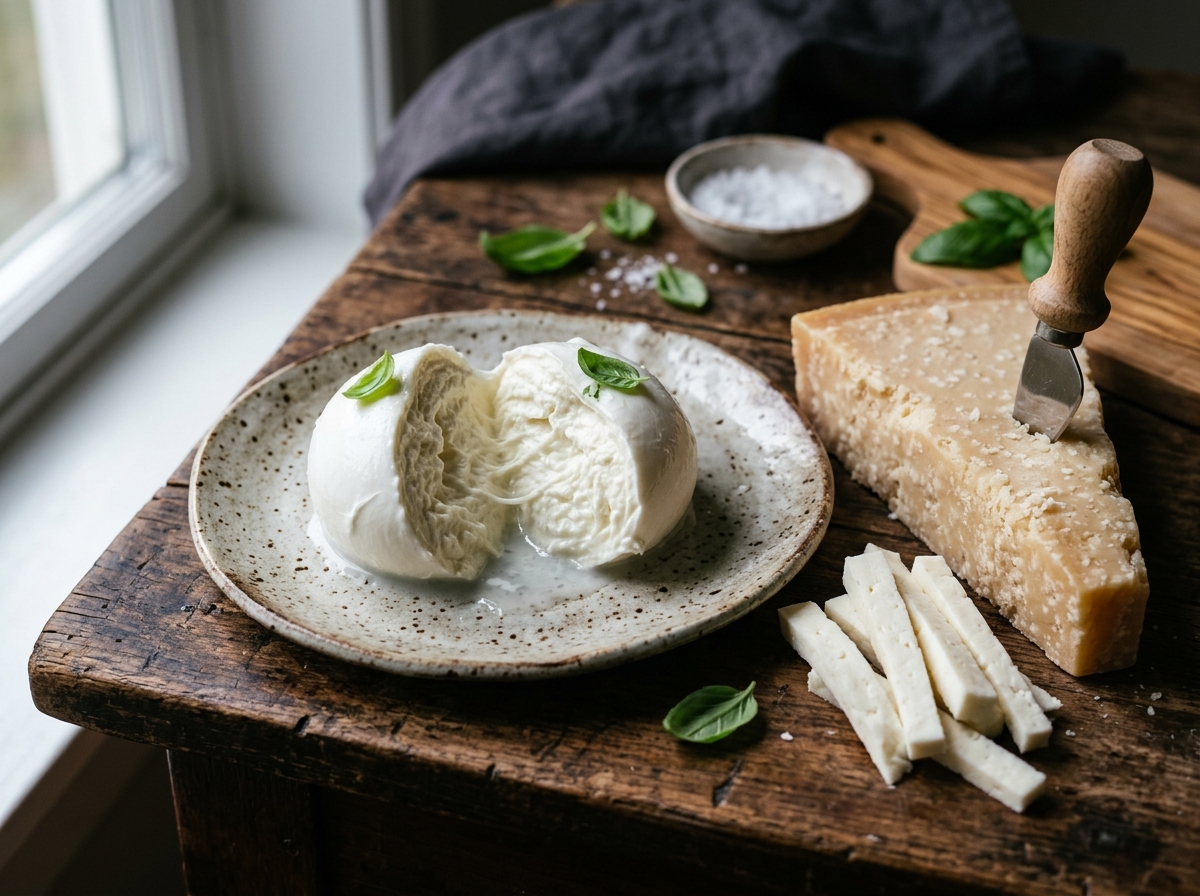
Dairy Rheology & Pasta Filata Physics
Fior di Latte vs. Mozzarella di Bufala on Pizza: Moisture Kinetics, Casein Melt Rheology & Whey Drainage Protocol
The pH 5.2–5.4 Calcium-Casein Window, Fiammifero Cut Geometry, 3-Step Syneresis Control & Why Burrata Must Never Enter the Oven
Quick Answer: Fior di Latte vs. Mozzarella di Bufala vs. Low-Moisture Mozzarella
Choosing the right mozzarella for pizza is an architectural decision governed by total water percentage, butterfat-in-dry-matter, and oven bake duration:
- Fior di Latte (Cow's Milk Fresh Mozzarella — 52%–58% Moisture, 18%–22% Total Fat, ~44%–46% FDM): The everyday monarch of Neapolitan pizza. Its tightly cross-linked, linear pasta filata casein sheets melt at 60°C–65°C into a cohesive, elastic white mantle with minimal free whey release. Cut into 8–10mm fiammifero batons and drain for 6 hours before baking at 450°C–485°C.
- Mozzarella di Bufala Campana DOP (Water Buffalo Milk — 60%–65% Moisture, 24%–28% Total Fat, ≥52% FDM): Rich in short-chain fatty acids (butyric and caproic) and nearly double the raw butterfat of cow's milk, but held in a loose, porous micellar web that expels up to 35% of its weight in liquid whey when heated. Requires a 6–12 hour colander drain, strict 75g–80g portioning over a 12g Parmigiano sponge, and either a 60–80s flash bake (≥430°C) or a 90-second split-bake in domestic ovens.
- Low-Moisture Whole Milk Mozzarella (LMWM — 45%–50% Moisture, 22%–25% Total Fat, ~45%–50% FDM): Engineered for extended 5-to-8-minute bakes in domestic home ovens (260°C–290°C / 500°F–550°F on a baking steel) and New York deck ovens. Zero watery syneresis; always grate fresh from a whole block to avoid the anti-caking cellulose and potato starch coatings found on supermarket pre-shredded bags.
1. Master Mozzarella & Pizza Dairy Comparison Matrix
| Dairy Variety | Moisture % | Total Fat & FDM % | Optimal pH Window | Cut Geometry | Drain Time | Oven Compatibility & Stage |
|---|---|---|---|---|---|---|
| Fior di Latte di Agerola (Cow's Milk) | 52% – 58% | 18%–22% Fat (44%–46% FDM) |
pH 5.20 – 5.40 (Siero-innesto) |
8–10mm Fiammifero matchstick batons | 4 – 6 Hours (Colander at 12°C–15°C) | 450°C–485°C Stage 0 Or 280°C Steel (drained 8h) |
| Mozzarella di Bufala Campana DOP | 60% – 65% | 24%–28% Fat (≥52% FDM) |
pH 5.15 – 5.30 (Natural whey) |
Thin 5mm slices or hand-torn chunks | 6 – 12 Hours (Colander + linen blot) | ≥430°C Flash (75g max) Or 280°C Split-Bake (last 90s) |
| Low-Moisture Whole Milk (LMWM Block) | 45% – 50% | 22%–25% Fat (45%–50% FDM) |
pH 5.20 – 5.35 (Cultured starter) |
Coarse hand-shredded from cold block | 0 Hours (Zero free whey syneresis) | 260°C–290°C Home Steel 4–8 min bake (NY / Artisan) |
| Provola Affumicata (Straw-Smoked) | 46% – 50% | 20%–23% Fat (45%–48% FDM) |
pH 5.20 – 5.35 (Smoke-dehydrated) |
6–8mm batons or 6mm dice | 1 – 2 Hours (Naturally low serum) | All Ovens (Stage 0) Ideal for high-moisture greens |
| Burrata & Stracciatella (Puglia) | 65% – 70% | 26%–32% Fat (>60% FDM) |
pH 6.10 – 6.40 (Unfermented panna) |
Torn open whole or spooned ribbons | Drain outer brine 15 min; temper to 18°C | STRICTLY Stage 2 (Post-Bake) Emulsion breaks >65°C in oven |
| Supermarket Pre-Shredded Bag (LMPS) | 45% – 48% | 15%–18% Fat (35%–40% FDM) |
pH 5.50 – 5.70 (Citric acid injected) |
Factory-shredded + cellulose/starch coat | Avoid on artisan pizza | Scorches & Oils Off Cellulose blocks shred fusion |
2. Casein Micelle Rheology: The Magic Window of pH 5.2 to 5.4
Why does authentic fior di latte from Agerola or the Monti Lattari stretch into long, tender, ivory silk sheets that dissolve effortlessly on the palate, whereas industrial supermarket mozzarella turns into a tough, rubbery mat swimming beneath a puddle of orange grease? The secret lies in calcium-mediated casein micelle cross-linking and the method of acidification.
Milk is an emulsion of butterfat globules suspended in water, stabilized by billions of microscopic protein clusters called casein micelles. In fresh, unfermented milk (pH 6.6), individual casein sub-micelles are locked rigidly together by colloidal calcium phosphate bridges (Ca9(PO4)6). Think of these calcium bridges as molecular padlocks: as long as they remain fully intact, the protein curd is brittle and cannot stretch.
In traditional Campanian cheesemaking, raw or gently pasteurized morning milk is inoculated with siero-innesto—a living whey starter culture from the previous day's batch rich in wild thermophilic lactic acid bacteria (Streptococcus thermophilus and Lactobacillus delbrueckii subsp. bulgaricus). Over 4 to 6 hours of biological ripening, these bacteria ferment lactose into lactic acid (H+), progressively solubilizing colloidal calcium phosphate from the micelles into the whey:
Under-Acidified Curd
pH > 5.5
Too many calcium phosphate padlocks remain intact. Plunged into 85°C water, the curd refuses to stretch, snapping and crumbling like chalky feta.
The Pasta Filata Sweet Spot
pH 5.2 – 5.4
Optimal demineralization: enough Ca2+ dissolves so casein chains slide past one another in 85°C water, aligning into parallel silk fibers that trap fat globules.
Over-Acidified Curd
pH < 5.0
Approaching the isoelectric point of casein (pH 4.6). Excessive calcium loss destroys structural cohesion; curd dissolves into soupy paste and leaks butterfat.
Why Supermarket Pre-Shredded Mozzarella Sweats Orange Grease (“Oiling Off”)
Mass-market cheese factories bypass 5-hour biological fermentation by injecting cold milk with concentrated industrial citric acid to force curd formation in 20 minutes. Without gradual enzymatic proteolysis and balanced calcium bridging, the casein matrix is brittle and unstable: under oven heat, the protein network contracts violently like a wrung sponge, ejecting liquid butterfat into a slick lake of orange grease (syneresis of fat). Worse still, pre-shredded bags are tumbled in powdered cellulose (wood pulp), potato starch, and natamycin to prevent clumping in plastic pouches. In a 450°C oven, those starch coatings absorb surface moisture, scorch into bitter brown blisters, and encase each shred in a dry skin that blocks seamless melting.
3. The 3-Step Home & Pizzeria Whey Drainage Protocol
Walk behind the marble prep bench of any great pizzeria in Naples, and you will never see fresh mozzarella cut into thick cubes (tasselli) or torn straight from cold packing water onto raw dough. Because pasta filata is built from parallel, anisotropic protein sheets folded during stretching (filatura), cut geometry directly dictates both gravity whey drainage and 60-second melt kinetics.
Follow this mandatory 3-Step Whey Drainage & Thermal Tempering Protocol before launching a single pie:
Step 1: Longitudinal Cut into 8–10mm Fiammifero Batons (Never Cubes)
T-Minus 6 to 12 HoursSlice the cold mozzarella sphere in half, then cut parallel to the stretched protein grain into long matchstick batons known as taglio a fiammifero:
- Capillary Fiber Drainage: Slicing along the parallel casein sheets opens the microscopic inter-fiber serum channels, allowing unbound free whey to weep out effortlessly by gravity without requiring mechanical squeezing (which would expel valuable milk fat globules).
- Eliminating the Cold Cube Core: A thick 2cm cube has a low surface-area-to-volume ratio and an insulated cold core. In a 60–90s bake, the exterior of a cube blisters and oils off while its center remains unmelted at 25°C, dumping trapped water mid-bake. An 8–10mm fiammifero baton heats uniformly to 62°C in 40 seconds.
Step 2: 6–12 Hour Cold Colander Syneresis Drain
Duration: 6h (Fior di Latte) / 8–12h (Bufala DOP)Arrange the cut batons loosely in a perforated stainless-steel colander suspended over a bowl so the cheese never sits in its own expelled whey. Cover the top loosely with parchment paper (never airtight plastic wrap, which traps condensation) and place in the refrigerator:
- Fior di Latte (52%–58% H2O): Drain for 6 hours. The batons will shed 8%–12% of their initial mass as clear watery serum, firming the exterior while keeping internal butterfat emulsified.
- Mozzarella di Bufala Campana DOP (60%–65% H2O): Drain for 8 to 12 hours. Because water buffalo casein micelles are larger and more porous, Bufala holds a massive reservoir of free whey. For home ovens (260°C–290°C), gently blot the drained slices between lint-free linen towels 30 minutes before baking.
Step 3: Room-Temperature Thermal Tempering to 18°C–20°C
T-Minus 45 to 60 Minutes Before BakeRemove the colander from the refrigerator 45 to 60 minutes prior to baking so the drained batons temper to cool room temperature (18°C–20°C):
- Preventing Thermal Shock to Sauce & Dough: Placing 4°C (39°F) refrigerator-cold mozzarella onto a 2mm dough center acts as an ice pack that steals conductive heat from the baking stone and drops the tomato interface temperature, stalling oven spring and starch gelatinization.
- Reducing ΔT to the 60°C Melt Threshold: Tempering the curd from 4°C to 19°C cuts the required thermal climb to the 60°C–65°C casein flow point by 26%, ensuring the cheese melts into a velvety, unbroken blanket at the exact second the cornicione achieves leopard spotting.
Interactive Mozzarella Drainage & Melt Rheology Calculator
Select your cheese variety, oven environment, and number of pizzas to compute raw purchase weight, expelled whey volume, and exact staging protocol.
Calculates wet purchase weight vs. drained net weight
Drained Dose / Pie
75 g
8–10mm Fiammifero Batons
Buy Wet Curd Mass
335 g
Yields 300 g Drained
Whey Expelled in Drain
35 mL
6h Colander Syneresis
Tempering Target
18°C–20°C
45–60m Before Launch
Execution Protocol: Slice 335g wet Fior di Latte along the stretched protein grain into 8–10mm fiammifero matchsticks. Drain 6 hours in a covered colander (shedding ~35 mL free whey) to yield 300g net curd (75g per pizza). Temper to 18°C–20°C for 45 minutes before baking at 485°C.
4. Why Burrata & Stracciatella Must Never Enter the Oven (Emulsion Phase Separation >65°C)
Born in Andria on the Murgia plateau of Puglia in the 1920s, Burrata is a thin outer pouch of spun pasta filata mozzarella filled with stracciatella—hand-pulled, frayed shreds of stretched curd steeped in fresh, unfermented heavy dairy cream (panna). With a total moisture content of 65% to 70% and fat-in-dry-matter exceeding 60%, it is one of the most luxurious textures in Italian gastronomy.
Yet placing Burrata or Stracciatella onto raw dough before baking (Stage 0) is a guaranteed thermodynamic disaster. Here is why Burrata is strictly a Stage 2 (Fuori Forno) ingredient:
What Happens When You Bake Burrata (>65°C)
- Irreversible Cream Emulsion Breakdown: Unlike fermented mozzarella curd (stabilized by a continuous casein network at pH 5.2), the liquid heavy cream (panna, pH 6.3) inside burrata is a fragile oil-in-water emulsion stabilized only by native milk fat globule membranes (MFGM). Above 65°C (149°F), MFGM proteins denature and fat globules coalesce, splitting the cream into a yellow slick of clarified butteroil and a watery pool of whey.
- Thermal Heat-Sink Collapse: A whole 125g burrata ball placed in the center of a pizza acts as a massive cold thermal sink, leaving the underlying dough completely raw and gummy while the outer crust burns.
The Correct Stage 2 (Fuori Forno) Protocol
- Bake the Base First: Bake your pizza in Stage 0 with San Marzano tomato sauce (or cherry tomatoes), a light 12g dusting of Parmigiano-Reggiano, and a modest 40g–50g base of drained fior di latte if desired.
- Temper & Tear Out of the Oven: Remove Burrata from its packing liquid 30 minutes before service so it reaches 16°C–18°C. The instant the blistered pizza lands on the cutting board, tear the burrata open or spoon ribbons of stracciatella over each slice. The contrast between the 85°C crispy crust and cool, sweet, intact cream creates extraordinary thermal duality.
5. Frequently Asked Questions: Pizza Mozzarella & Dairy Science
What is the difference between Fior di Latte and Mozzarella di Bufala on pizza?
Fior di Latte is made from whole cow's milk (52%–58% moisture, 18%–22% total fat, ~44%–46% fat-in-dry-matter) and has a firm, linear casein matrix that melts into a smooth, stretchy blanket without flooding the crust. Mozzarella di Bufala Campana DOP is made from Mediterranean water buffalo milk (60%–65% moisture, 24%–28% total fat, ≥52% fat-in-dry-matter) with nearly double the raw butterfat and a looser micellar web that releases a deluge of milky whey above 60°C. Bufala requires 6–12 hours of colander drainage and strict portion control (75g–80g max per 260g dough ball).
Why should you cut mozzarella into matchstick batons (taglio a fiammifero) instead of cubes?
Pasta filata cheese consists of parallel protein sheets aligned during hot-water stretching. Cutting mozzarella along the grain into 8–10mm matchstick batons (taglio a fiammifero) opens the longitudinal capillary channels between casein fibers so free whey drains naturally by gravity over 6–12 hours without squeezing out milk fat. Furthermore, thin batons have low thermal mass and melt evenly in 40–60 seconds, whereas thick cubes trap a cold, insulated core that weeps water while the exterior blisters.
Why does supermarket pre-shredded mozzarella turn rubbery and sweat orange grease?
Supermarket pre-shredded mozzarella fails for two chemical reasons: first, it is acidified rapidly with industrial citric acid rather than living whey cultures (siero-innesto), leaving an unstable casein network that collapses under heat and squeezes out liquid butterfat (“oiling off” or fat syneresis). Second, factory shreds are tumbled in powdered cellulose (wood pulp), potato starch, and natamycin to prevent clumping; these starches absorb surface moisture and scorch into dry skins that prevent the shreds from fusing into a creamy melt.
Why must Burrata and Stracciatella never be baked inside a pizza oven?
Burrata is an outer pouch of stretched mozzarella filled with stracciatella—shredded pasta filata fibers suspended in unfermented heavy dairy cream (panna, 65%–70% moisture, >60% fat-in-dry-matter). Unlike fermented casein curd, unfermented heavy cream is an oil-in-water emulsion that undergoes irreversible phase separation above 65°C (149°F), splitting instantly in a hot oven into a puddle of watery serum and yellow liquid butterfat. Always apply Burrata and Stracciatella post-bake (Stage 2, Fuori Forno) at cool room temperature (16°C–18°C).
How do you bake Mozzarella di Bufala in a home oven without making the pizza soggy?
Because a domestic home oven at 260°C–290°C (500°F–550°F) requires a 5-to-7-minute bake, baking buffalo mozzarella from the start causes total casein collapse and floods the crust with whey. Use the Two-Stage Split Bake: first, slice Bufala 8–12 hours ahead and drain in a colander lined with paper towels. Second, bake your stretched dough with strained San Marzano sauce and 12g grated Parmigiano-Reggiano on a baking steel for 3 to 4 minutes until the crust is puffed and set. Finally, slide the pizza to the oven door, scatter the drained Bufala slices, and return under the broiler for just 90 seconds to melt the curd without triggering whey syneresis.
New Release · Paperback & Kindle
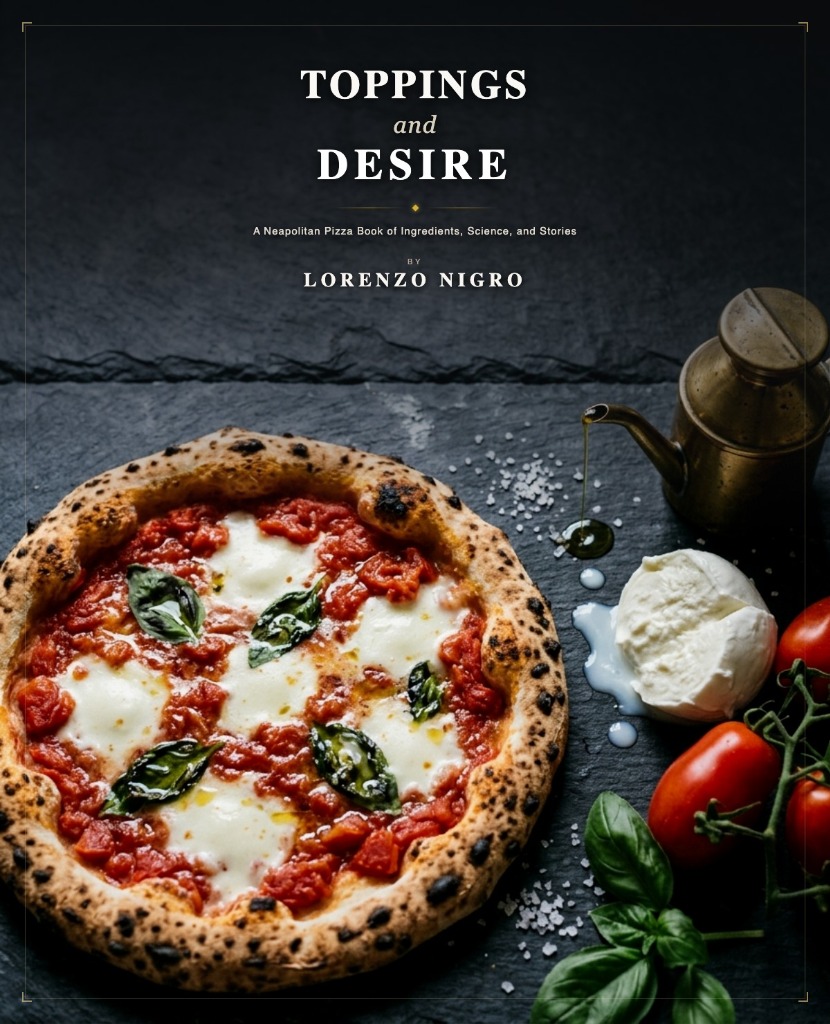
Toppings and Desire: A Neapolitan Pizza Book of Ingredients, Science, and Stories
Dive into Chapter 3 (The White Melt — Dairy, Proteins & Rheology) and Chapter 11 (Pizza Bufalina — The Voluptuous Empress) in our 214-page full-color book featuring 60 photographic plates and 78 schematic cards. Master every Italian dairy variety—from Agerola fior di latte and Caserta bufala to cave-aged Provolone del Monaco DOP and Ricotta di Pecora.
Topping & Moisture Architect
Model exact cheese moisture loads, syneresis risk, and Stage 0 vs. Fuori Forno combinations interactively before you bake.
Launch ArchitectToppings and Desire
Available in Paperback (214 pages, 60 plates, 78 schematic cards) and Kindle on Amazon. The definitive guide to Neapolitan pizza ingredients.
Get the Book on Amazon